Why Black and Indigenous Solidarity is Essential
Black and Indigenous solidarity is a vital and ongoing act of survival, resistance and transformation. Rooted in centuries of shared struggle against colonialism, slavery and systemic violence, this solidarity offers a powerful framework for dismantling oppression and building a future grounded in justice, equity and liberation.
A Shared History of Resistance
The solidarity between Black and Indigenous peoples isn’t something new or something we have to reinvent. It’s rooted in generations of shared struggle, resistance and the understanding that our liberation has always been deeply connected.
From maroon communities where Africans escaping enslavement and Indigenous peoples built lives together beyond the reach of colonial powers to the alliances that helped people find their way to freedom, our ancestors understood something we’re still fighting to remember today: the very systems that sought to enslave one people and dispossess another were never separate from one another. Neither could our resistance be.
We see that same legacy carried forward through the Civil Rights and Red Power movements, through the work of the Black Panther Party and the American Indian Movement and through generations of people who understood that liberation was never just about resisting oppression. It was also about building something beyond it. Feeding our communities, protecting one another, reclaiming our relationships to land and creating the conditions for our people to live with dignity and self-determination.
At Tending Futures we understand our work as a continuation of that legacy. We’re not inventing new ways of caring for one another. We’re remembering, reclaiming and tending to ways of being that have sustained our peoples for generations. Our struggles have always been interconnected and so, too, are the futures we are responsible for cultivating.
Cultural Resilience and Healing
For Black and Indigenous peoples, resistance has never been limited to what happens on the frontlines of a protest or in the halls of government. Sometimes resistance looks like speaking a language our ancestors were punished for using, practicing ceremonies that were once outlawed or passing down stories that were never meant to survive. Sometimes it looks like the food we prepare, the songs we sing, the medicines we grow and the ways we teach our children to understand who they are and where they come from.
Colonization and enslavement were about severing people from their histories, their relationships, their spiritual practices and ultimately themselves and yet, generations later, we’re still here because our ancestors found ways to preserve, adapt and carry forward what they could even when doing so came at enormous personal risk.
We see that legacy in Afro-Indigenous communities throughout the diaspora, from the Garifuna of Central America to the Gullah Geechee of the southeastern coast and the descendants of Africatown here in the Gulf South. These communities hold histories that can’t be neatly separated into Black or Indigenous, African or Native. Their existence challenges the colonial boundaries that have so often been used to divide us and reminds us that our peoples have been building lives, families and futures together for centuries but we also have to be willing to talk about whose bodies have borne so much of the violence that comes with these histories. The ongoing crisis of Missing and Murdered Indigenous Women, Girls and Two-Spirit peoples and the disproportionate violence experienced by Black Women and Girls aren’t separate conversations. They are connected to the same systems that have historically treated our bodies as disposable, our suffering as unremarkable and our disappearances as unworthy of urgency.
And far too often, it has been Black and Indigenous Women and Two-Spirit peoples who have been left to respond to that violence while simultaneously carrying so much of the work of keeping our communities alive. We have organized searches, cared for grieving families, protected children, preserved ceremonies, tended the land and built networks of care where institutions have failed us because survival has so often demanded it of us.
At Tending Futures we believe cultural reclamation and collective care are inseparable from the work of liberation. Our traditions are living practices that continue to teach us how to relate to one another, how to care for the land and how to build communities where our people can do more than survive. Part of honoring the generations who carried these ways forward is refusing to romanticize the suffering that made their survival necessary. We owe our ancestors more than remembrance and we owe the generations coming after us more than another inheritance of struggle. We owe them the opportunity to live fully, safely and unapologetically in who they are.
That, too, is what it means to tend to our futures.
Shared Struggles Against Oppression
The violence experienced by Black and Indigenous communities has never existed in isolation. From the theft of Indigenous lands and the enslavement of African peoples to the ongoing realities of police violence, mass incarceration, environmental destruction and economic exploitation, we have been navigating systems built on the same foundations of dispossession and control. The ways those systems show up in our communities may look different but the roots are often the same and understanding those connections is essential to understanding what it means to struggle for liberation together.
We see this most clearly in the fight for environmental justice. From Standing Rock to Flint, from Black Mesa to Cancer Alley, our communities have been forced to bear the consequences of industries and institutions that treat our lands, waters and bodies as expendable. These aren’t isolated tragedies or unfortunate consequences of progress. They are the predictable outcomes of systems that have long determined whose lives are worth protecting and whose communities can be sacrificed.
Our histories aren’t just stories of what has been done to us. They are also stories of what we have refused to accept. Across generations, Black and Indigenous peoples have organized to defend our lands, protect our waters, care for our neighbors and demand something beyond mere survival.
At Tending Futures, we believe environmental justice can’t be separated from racial justice, land sovereignty or collective liberation. We can’t talk about healing our communities without talking about healing our relationships to the land. We can’t talk about protecting the Earth without confronting the systems that have made certain people and places disposable and we can’t build the futures our communities deserve without recognizing that what happens to one of us is never entirely separate from what happens to the rest of us.
Our liberation is interconnected because our lives, our lands and our futures have always been interconnected. The work isn’t just what’s harming us but to cultivate something that makes those systems of harm obsolete.
Building a Future of Liberation
When we talk about Black and Indigenous solidarity, we’re talking about something much deeper than simply recognizing that our communities have experienced similar forms of oppression. We’re talking about an understanding that our lives, our struggles and our futures have always been connected. That the systems responsible for so much of the harm our peoples have endured were intentionally constructed to separate us from our lands, from one another and from the ways of being that sustained us long before colonization. And that building something different requires us to challenge not only those systems but the ways we have been taught to understand our relationships to each other.
Solidarity isn’t just showing up for one another when there’s a crisis or finding common ground in our suffering. It requires us to be accountable to one another, to recognize the differences in our histories and experiences without allowing those differences to become divisions and to understand that none of us can claim liberation while reproducing the very systems of harm we’re trying to dismantle. Most importantly, it requires us to imagine something beyond survival because our ancestors didn’t endure everything they endured for us to inherit a world where the best we can hope for is to survive another generation of violence, displacement and exploitation. They carried forward languages, ceremonies, medicines, stories and ways of living because they believed there would be generations after them who deserved to know those things, who deserved to belong to the land and to one another, who deserved lives that weren’t entirely defined by resistance to oppression.
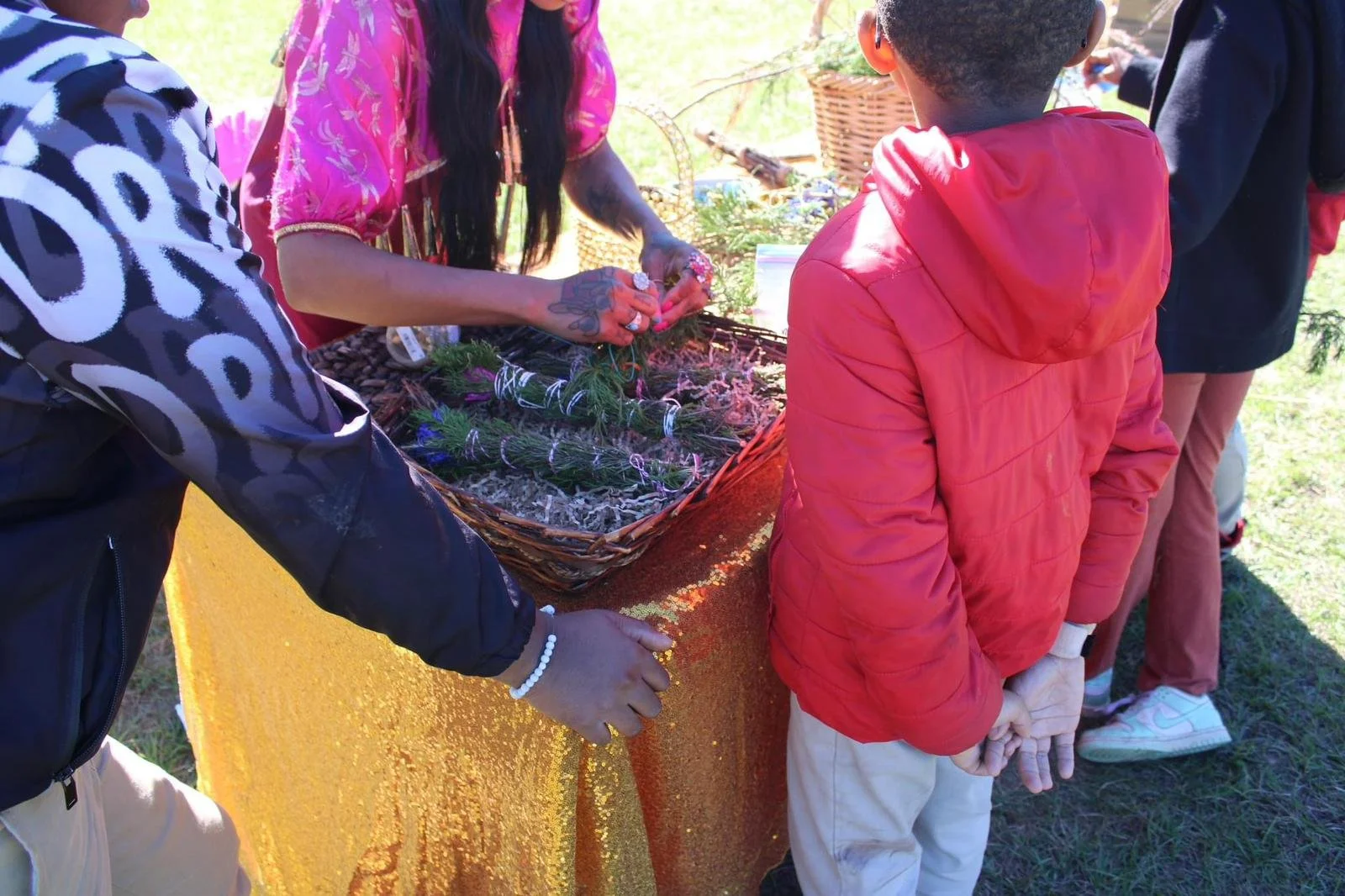
At Tending Futures that understanding is at the heart of everything we do. We believe the work of liberation is as much about what we are cultivating as it is about what we are resisting. It’s about returning to relationships rooted in reciprocity instead of extraction, recognizing the Earth as a relative instead of a resource and rebuilding the practices of collective care that colonization has spent generations trying to unravel. It’s about recognizing that the wisdom we need to build different futures isn’t something we have to wait for institutions to hand us. So much of it already exists within our communities, in the knowledge our elders carry, in the teachings of our ancestors and in the everyday ways our people have continued to care for one another despite everything.
Honoring that legacy also means being willing to do the difficult work of confronting the harm that exists within our own communities, challenging the divisions we have inherited and refusing to mistake proximity for genuine solidarity. We don’t build liberated futures just by declaring that our struggles are connected. We build them through the choices we make, the relationships we nurture, the responsibilities we accept and the ways we show up for one another when doing so isn’t easy or convenient. The future we’re working toward isn’t one where Black and Indigenous peoples have simply become better at surviving the conditions imposed upon us. We’re building a future where our children inherit something fundamentally different, where our cultures and traditions aren’t just remembered but lived. Where our lands and waters are protected because we understand our responsibilities to them. Where care isn’t a privilege, belonging isn’t conditional and our communities have the freedom to determine what flourishing looks like for themselves.
That’s ultimately what Black and Indigenous solidarity asks of us: to take responsibility for what we are leaving behind. The goal can’t be to survive this world as it exists. It has to be to cultivate one where our people, our lands and all of our relations can finally thrive.